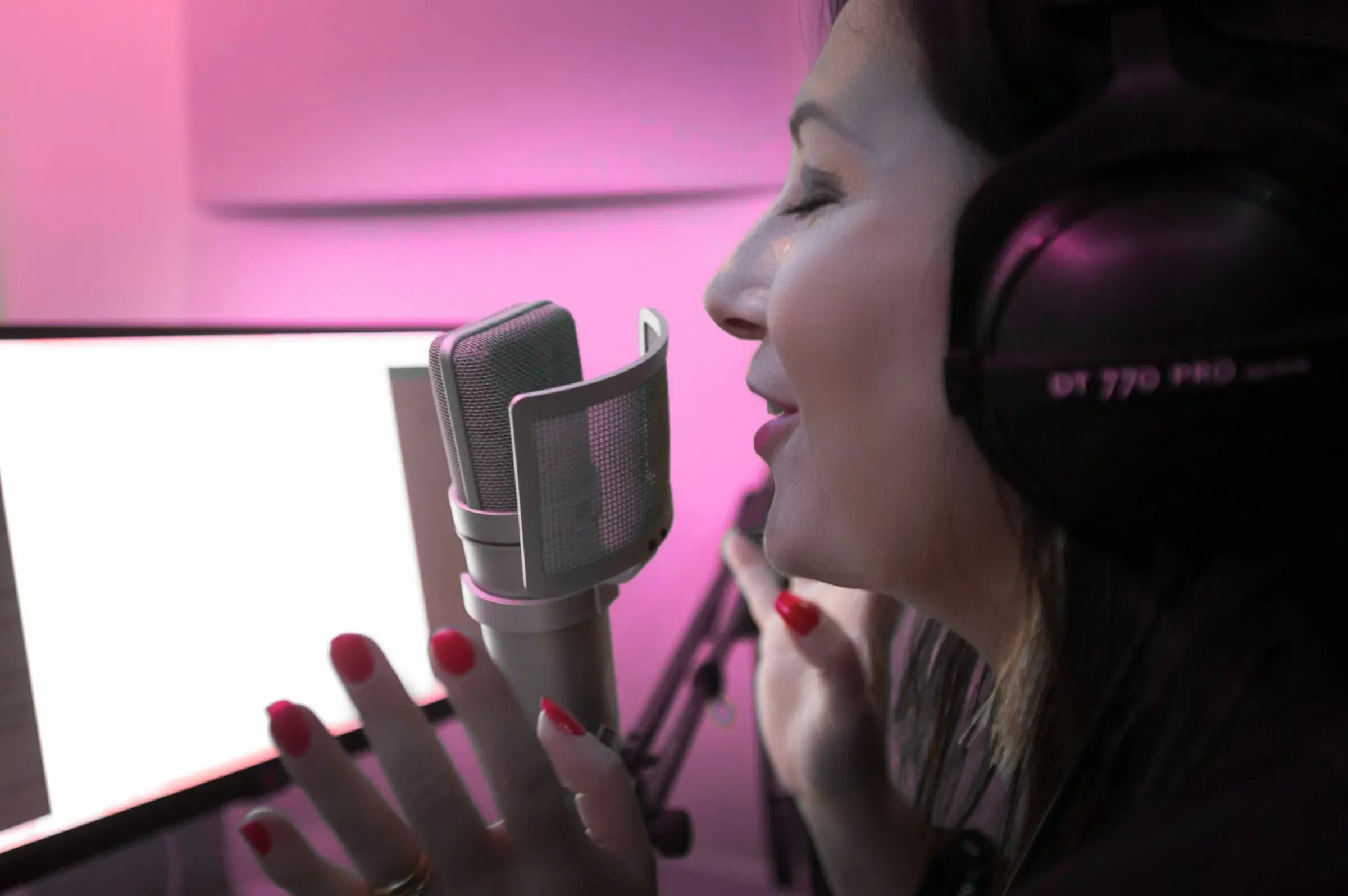

That little tune in your head... you know, the urge to play with words, to convey emotion through your voice alone? If it keeps coming back, you are probably not alone. Voice acting sparks curiosity and draws people in. Perhaps you want more meaning in your work, a career change that feels more like you, or simply a little more freedom in your working day. Whatever the reason, that inner voice deserves a proper hearing.
Yet there can be a world of difference between an exciting idea and the reality of the job. How do you turn that desire into a real profession? Where do you start? And first of all, is it really for you?
I will be frank: not a week goes by without someone writing or calling to say ‘I have a lovely voice’ or ‘I love dubbing; how do you become a voice actor?’ That question comes up again and again. I took the time to write this guide precisely to give a clear answer, without the gloss.
Forget the glamour and the neatly mapped-out careers. I wanted this guide to be different: direct, practical and straightforward. With more than twenty years spent working with microphones and scripts as a voice actor, I have seen a fair bit. The doubts, the struggles, and above all the enormous rewards of a profession that is as demanding as it is exciting. My aim is to give you an honest, realistic route to becoming a professional voice actor in France, from your first questions to your first signed contracts. Come behind the scenes and see what it really involves.
Thinking about voice acting? You may be on to something!
If the idea of working with your voice appeals to you, there is probably a reason. Of course, it has the image of a creative, independent career, and that part is true! But starting out in voice over often touches something deeper. You are choosing a path where your personal sensitivity has to work alongside solid technique. You are also entering the world of business, particularly if you want to become a freelance voice actor, with all the freedom and responsibility that brings.
In a world full of images, the human voice still has something special, doesn't it? It creates a direct connection, guides us, reassures, persuades, makes us smile or moves us deeply. Think of the documentary that held your attention, the advert you remembered, or the audiobook that transported you. Behind each is a voice, chosen and developed to strike the right note. Contributing to that little bit of magic is deeply satisfying, day after day.
What keeps me going after all these years? The chance to move between different worlds, finding the right tone with teams who are often just as passionate as I am, so that a simple script takes on depth. Every project is a fresh page and a new challenge. If that speaks to you, exploring voice acting could be a very good next step.
Being a voice actor in France today: look beyond your ‘nice voice’
Let's be clear from the outset: yes, a pleasant tone helps. But it does not make you a voice actor. Far from it. The idea that a ‘nice voice’ will open every door is persistent, but the reality is much more technical. Being a professional voice actor today is first and foremost a skilled craft, combining artistry and practical know-how.
Imagine the range involved: an energetic advert that has to land in 15 seconds, followed by measured narration for a wildlife documentary, then an e-learning module that must stay clear for 45 minutes, and a telephone hold message that needs warmth, without overdoing it. Each project is a new role to inhabit. You need to adjust your tone, rhythm and the intention behind every word to fit the message and the people who will hear it.
Then there is everything else: those supposedly peripheral skills that make all the difference. Understanding a brief, even a vague one; preparing thoroughly; being completely reliable with deadlines; and staying flexible when something changes at the last minute. This profession calls for a good ear, technique, plenty of creativity and dependable professionalism.
The essential step: serious voice over training
So here is the awkward question: can you really become a voice actor without any training? A few rare people may manage through extraordinary natural talent or sheer good fortune. But for the vast majority of us, especially if we want a lasting career, investing in quality voice over training is a foundation, not an optional extra.
For my part, I learned through radio in the 90s (yes, the last century).
At the time, dedicated voice over training did not really exist. I paid for my studies by working in local radio and learned in the studio, recording commercials on the spot. It was intense, educational, sometimes a little brutal, and incredibly valuable.And I still train today. For more than 15 years, I have worked in directed sessions with my clients, which are practical lessons in themselves.
I attend events such as the One Voice Conference in London and regularly take individual coaching to refine particular techniques or challenge myself in new areas.
For me, training is not a box you tick once. It is a professional habit.
 Estelle Hubert
Why do I insist on it? Because voice acting is something you learn. Good training gives you the foundations: vocal technique (how does abdominal breathing work, how do you articulate clearly, and how do you place your voice so it carries?); performance (how do you make a script sound truthful and vary its colours?); equipment skills (the microphone is not your enemy, and you need the basics of recording software); an understanding of different markets (a yoghurt advert and a historical documentary call for different deliveries); and professional practice. It is also the place to receive frank, constructive feedback from professionals, make mistakes in realistic conditions and begin building your network.
Discover my journey as an online voice actor
Voice over training: choosing the right starting point in France
There is plenty of choice, which is good news. The key is to stay focused. Several routes are available:
- Specialist schools: Established organisations such as Vox Populi, INA and Les Coachs Associés, among others, offer dedicated courses, often with a strong practical focus.
- Intensive workshops: A few days or weeks to focus on a particular area, such as commercials, documentaries or dubbing, or to get a solid introduction. Organisations such as IMDA are known for this.
- Individual coaching: A tailored approach to a specific difficulty, your distinctive style or an important upcoming opportunity. If you have already started and want an outside view of your performance, studio or positioning, explore my individual voice over coaching (in French).
The key is to choose what suits YOU. Read the programmes carefully: do they cover both technique and performance? Who teaches them? Working professionals are a good sign. How much time will you actually spend behind a microphone? Are the groups small enough for individual attention? Then consider funding: look into AFDAS if you have relevant entitlements or the course is approved. Often the best approach is to contact the providers directly, ask questions and read feedback from former participants. Find a format that matches your level, ambitions and budget. It is your journey, after all.
Your first voice over home studio: the essentials without breaking the bank
Training is your driving licence. To get moving, you also need a car: your voice over home studio. A large part of the work now happens remotely. Having your own space to record is almost essential, especially at the start. It gives you the flexibility to respond quickly, audition from home and deliver clean sound.
The aim is not to turn your bedroom into a Hollywood studio. You need clear, clean audio, without bathroom echoes or refrigerator noise. The good news is that you can begin with decent equipment without spending a fortune. Start with a workable basic setup and improve it gradually.
The essential home studio setup
What goes into that basic kit?
The voice over microphone: The studio's star, capturing your voice. For spoken voice, a large-diaphragm condenser microphone is a common choice because of its sensitivity, precision and ability to pick up nuance. Names often mentioned for an affordable start include the Rode NT1-A, Aston Origin and Audio-Technica AT2020. These are starting points, of course. If possible, listen to comparisons or try them, because every voice responds differently. My first microphone, bought in 2004, was a Neumann TLM103. I still use it in my second studio.
The audio interface: This small box connects your microphone, with its XLR connector, to your computer, usually via USB. It also contains a preamp to boost the microphone signal. Brands such as Focusrite (the Scarlett series is a familiar choice), PreSonus and Steinberg make reliable, accessible interfaces. For a step up, the SSL 2 from Solid State Logic is an excellent option: clear, accurate sound and sturdy construction, making it a favourite with many professionals.
Closed-back headphones: These let you hear yourself while recording, known as monitoring, while limiting sound escaping and being picked up by the microphone as bleed. Closed-back headphones provide useful isolation. The Beyerdynamic DT 770 Pro and Audio-Technica ATH-M50x are dependable, durable choices.
The computer and recording software, or DAW: You do not need a powerhouse. A reliable PC or Mac with enough RAM will do. There is plenty of recording and editing software to choose from, including free or inexpensive options. Audacity is a straightforward starting point. Reaper offers extensive features for its price. On a Mac, GarageBand is another starting point. You can move to Pro Tools, Logic Pro or Cubase later if you want or need to.
I have worked with Soundforge for more than 20 years. And, honestly, I do little beyond pressing ‘REC’ and ‘STOP’. Why? Because I am fortunate to work with a sound engineer, whether my own in a directed session or the studio's or client's engineer. I focus on the performance and leave them their area of expertise. You can certainly go further with audio processing. But it is a profession in its own right: you need training, time, and to charge for that technical service in addition to the voice.Acoustics: the often-forgotten element that changes everything: Even the best microphone cannot rescue a recording made in a room full of reverberation.
You are aiming for a dry sound, without echo or a hollow quality. This involves acoustic treatment, which is different from soundproofing.
A small but crucial distinction:
Acoustics describes how sound behaves inside your room. Does it reverberate? Is it absorbed, or does it bounce around?
Soundproofing is about keeping outside noise, such as neighbours, traffic, footsteps and barking, out of the recording.
These are different but complementary concerns. A room can be well isolated from the outside and still sound like an empty bathroom.
Or it can sound dry but let in street noise. Either can make a recording unusable.
Ideally, you need a quiet room with reasonable sound isolation, acoustically treated to control reverberation.
How can you do that in practice?
Choose a room with furniture, curtains and thick rugs to help break up reflections.
A duvet or a wardrobe full of clothes can work well when starting out.
You can add an acoustic screen, but placement matters: used badly, it can dull an otherwise good sound.
If you enjoy DIY, you can make your own acoustic panels with mineral wool, wood and fabric; tutorials are widely available.
For larger projects or noisy surroundings, investing in a booth such as Studiobricks may make sense, while keeping the budget proportionate, especially at the beginning.
And remember the small essentials: a stable microphone stand to avoid bumps when you move, and a pop filter, the screen in front of the microphone that softens explosive ‘p’ and ‘b’ sounds.
In 2004, I invested €10,000 in my very first home studio. It was a bold decision, especially when home recording was far from commonplace.
I was convinced that this pioneering way of working would become the norm, and I wanted to show that I was a fully equipped professional, rather than someone improvising in a cupboard.
My second studio, considerably more ambitious and more expensive, is now an everyday working tool. It lets me work in excellent conditions, deliver promptly and, above all, concentrate on what matters most: the performance.
Estelle HubertDeveloping your voice: you are the instrument
Studio ready? Good. Now remember the essential part: your main instrument is your voice. Like any instrument, it needs practice, care and refinement, constantly. A beautiful voice is a start; knowing how to use it well is what matters.
Technique is the grammar of the voice: breathing, including abdominal breathing; articulation, so every word is clear even at speed; placement, for a full sound that is not trapped in the throat; rhythm, pauses and intention. These all take practice, ideally with guidance at the start to build good habits.
Technique should never become armour. It needs to serve the story you want to tell and the emotion you want to convey. The real work is finding your colour, your style, that distinctive quality that makes someone choose you. Explore different tones and energies. Try different voices, even if animation is not your goal. Play!
And listen. Listen to yourself. Record often and play it back, with an honest but forgiving ear. Yes, that can feel difficult at first. Notice what works, your habits and what could improve. Listen to other professionals too: how do they do it? What moves you? What irritates you? There is a great deal to learn. For daily practice, read anything you can aloud, try articulation exercises and tongue twisters, and work on your breathing.
When I started, I trained by repeating every advert I heard on television or radio. I imitated and analysed them, trying out intonations, rhythms and vocal placement.
Later, I practised what I call conscious imitation, drawing inspiration from voices I admired:
Sylvie Caspar, the unmistakable voice of ARTE for more than twenty years.
The Ushuaïa documentaries narrated by Marie-Dominique Bayle, with such poise and presence.
And, of course, Françoise Cadol's voice, full of emotion.
Without knowing it, these women helped me find my own style.
Estelle HubertReady to take the next step? Your demo and how to introduce yourself
Training? Done. Voice over home studio? Ready. Voice warmed up? Good. You may be ready to enter the arena, but take it one step at a time. Before contacting everyone, you need your calling card, your personal trailer: your voice over demo. It will speak for you first. It is the first impression, and often the only one, that casting directors, agencies and clients will have. It needs to be excellent.
Making a demo that gets noticed
A successful demo quickly shows what you can do: your range and ability to move between styles. Here are a few pointers:
- Show variety: Explore more than one style: a commercial, whether energetic, gentle or serious; a corporate extract; some narration, perhaps a documentary or story; and character work if that suits you. Show the breadth of your range and where you are really strong.
- Sound quality matters: Your demo is your showcase. It must sound professional, with clean, clear audio and no background noise or echo. A properly prepared home studio, or time in a professional studio, is essential. Poor sound undermines even the best voice.
- Keep it concise: People who review demos receive dozens. Respect their ears and their time. Aim for a maximum of 1 minute 30 for a general demo, with smooth transitions between extracts. Careful editing helps. You can make longer demos for individual genres later.
- Choose your scripts carefully: Write short passages that show you at your best and suit the kinds of projects you want to book.
Introducing yourself: simple, clear and personal
Your demo is ready. What next? It needs a suitable introduction. Whether in an email, on your future website or on a voice over casting platform, your presentation should be direct, professional and free of unnecessary padding.
Prepare a short biography: who you are, your vocal qualities, perhaps mid-range, deep, youthful or measured, and the styles in which you feel most comfortable. Keep it simple and authentic. You do not need an emotional sales pitch or technical jargon. Your demo is there to do the work.
Even a simple website with your demo, a few details and a contact address establishes your presence. LinkedIn can also be a useful place to begin building a professional profile.
Behind the paperwork: what legal status does a voice actor need?
Now for the less exciting but essential subject: a voice actor's legal status. In France, the appropriate legal framework depends on what you actually do. When a client hires you to perform a script for their production, you are a performing artist. With exceptions, French law presumes an employment contract, regardless of the amount or method of payment, even if you own the equipment. The two options often discussed, micro-enterprise and the intermittent entertainment workers' scheme, are therefore not interchangeable.
Micro-enterprise: a simple way to start?
On paper, it is appealing: straightforward to set up and manage, with contributions based on money actually received. But for the performance itself, official guidance is clear: a performing artist works as an employee within the entertainment sector framework. Performing through a micro-enterprise is theoretically possible when producing your own show, but it is unusual, with a real risk of reclassification as employment where a relationship of subordination exists with the client.
A micro-enterprise can make sense for a separate activity that is not directly connected with your performance. If you receive benefits as an intermittent entertainment worker, however, you cannot invoice the same activity through a micro-enterprise. The usual limitations also apply: turnover ceilings, VAT above the relevant threshold, and social protection, including pensions and unemployment cover, that may be less comprehensive than under other arrangements.
The intermittent entertainment workers' scheme: the ultimate goal?
This is a specific French scheme for artists and entertainment technicians. Its main attraction is social protection, particularly unemployment benefits between contracts. Eligibility requires a certain number of working hours or engagement fees, known as cachets, over 12 months: 507 hours for artists at the time of writing. Those hours must come from employers in eligible sectors, such as live performance and audiovisual production.
It is often a goal, but qualifying at the outset is another matter. You need enough work with eligible employers. In the meantime, your performance engagements remain employment contracts; that is how your hours count towards eligibility.
The right approach depends on your situation, plans and target clients. Take time to seek information from Urssaf, France Travail Spectacle and specialist advisers, starting with the official guidance, “Can an artist be a micro-entrepreneur?” It may feel tedious, but it helps avoid unpleasant surprises.
My advice? Make an appointment with your regional Chamber of Commerce.
It can be a useful starting point for setting up your business, choosing an appropriate framework and, sometimes, accessing start-up support.
You may also discuss your APE activity code: voice over businesses often use 5920Z (Sound recording and music publishing).
It may not be the most creative side of the profession, but it matters when getting started.
Estelle HubertFinding your first jobs: where to look for auditions and clients
Legal framework sorted? Demo polished? Motivation high? Then it is time to look for your first jobs. This is often when nerves appear. A methodical approach and persistence can help open doors. Where should you look for voice over auditions and your first clients?
- Online casting platforms: Many connect voice actors with agencies, production companies and other buyers, usually through subscriptions or commissions. They can provide regular opportunities, but competition is strong. Choose platforms that suit you and put care into your profile and applications. Avoid generic copy-and-paste submissions.
- Your network: Word of mouth and professional contacts are invaluable. Tell people what you do, without overwhelming them. Reconnect with former course participants, attend professional events, including online, and talk with other voice actors, sound engineers and directors. Our profession is often more friendly and supportive than people expect. Any conversation may lead to something later.
- Direct outreach: Approach people who may need your services: recording studios, advertising agencies, production companies, e-learning producers and audiobook publishers. Do your homework, choose suitable prospects, personalise your message and show what you can offer. It takes patient work, but can produce worthwhile results.
- Talent agents: An agent can open doors, negotiate on your behalf and bring access to more selective auditions. Securing representation as a beginner is uncommon, however. Focus first on working and building a portfolio.
One final piece of advice: do not expect perfection from your first job, but do not undersell your work either. Every project can help you progress, provided it is fairly paid for the intended usage. Starting out does not mean accepting everything. Learning to turn down work that devalues your profession is part of building your career. You are an emerging professional, not a low-cost option. The key is persistence with a sense of direction. There will be silence, refusals and promises to call back. Keep going, keep training, refine your demo and maintain your contacts. Opportunities rarely arrive by chance; consistency and integrity help you create them.
Estelle HubertThe difficult question: what should a voice over cost?
Money can be an awkward subject. How much should you charge? How do you write a sound quote without feeling that you are overcharging or being exploited? Many freelancers face this challenge, including in voice over. Yet pricing your work fairly is essential to a viable business.
There is no universal magic rate card. Prices vary considerably according to several factors:
- The type of project: A national television commercial is priced differently from a local company's introduction video or a dentist's answering-machine message.
- Usage: Where will the voice be heard? Worldwide online for 1 year, or on local radio for 1 month? Reach and duration are central to calculating usage rights.
- Volume: Script length and studio time matter. Some projects, such as e-learning and audiobooks, may be priced per word or per hour.
- Your standing: Experience and reputation play a part. A beginner's rates will differ from those of an established, recognisable voice.
- Additional technical work: Does the voice need to match picture? Will you clean up or edit the audio?
I have written a detailed article explaining how I approach quotes, with my method and practical examples: how to calculate a fair price for voice over. It should help you work through these questions.
A few straightforward pointers:
- Research the market: Find out what comparable projects tend to cost. Professional organisations such as LesVoix sometimes provide guidance, but treat it as guidance.
- Make quotes transparent: State exactly what is included: recording, rights (media, territory and duration) and any editing. Clarity helps everyone.
- Do not undersell yourself! Even at the start. Cutting prices harms your own business and puts pressure on the wider profession. Balance market expectations with the value of your investment in training, equipment and skills.
- Negotiation is possible: If a budget seems too low, explain why calmly. Sometimes you can find common ground.
You learn to set rates over time, project by project. Do not put excessive pressure on yourself at the start. Be fair, be clear and be willing to ask for what your work is worth.
From beginner to professional: building a lasting career
You have landed your first jobs. That is a good start. The longer challenge is turning those early successes into a sustainable business. Becoming a professional voice actor takes long-term commitment: care for your professional image, maintain relationships and keep developing your skills.
- Look after your online presence: A clear, professional website, even a simple one, should make your demos easy to find and you easy to contact. Give the same care to your voice over casting profiles and LinkedIn. Show that you take the work seriously and make life easy for anyone looking for you.
- Look after your clients: A satisfied client comes back and recommends you. Your voice matters, and so does the experience of working with you. Respond promptly, communicate clearly, keep your commitments on deadlines and quality, and be flexible where possible. Good human relationships often make the difference.
- Keep learning: The voice over world changes, from techniques and styles to client needs. Stay curious. Take workshops or coaching, listen to current work and follow developments such as AI voices and new audio formats. That is how you keep progressing.
- Maintain your network: Stay in touch, exchange ideas with colleagues and take part in professional life, even remotely. A good network provides information, support and often work.
You have made a start. Things have not quite fallen into place yet. Explore the coaching (in French)
Voice over: a demanding profession with much to give
Ready to begin?
Voice acting in France is a real adventure: intense, demanding and absorbing. Can you make a living from it? Yes. But it takes effort, patience and a clear view of the realities.
Completing a course does not make you a professional.
It makes you someone who has trained, which is a substantial first step. Building a viable business often takes at least three years to generate a regular income, and five years or more to earn a comfortable living.
In between comes everything the tutorials and polished LinkedIn pages leave out: quiet months, cancelled projects, unanswered follow-ups and self-doubt. Even experienced voice actors go through this. Nothing is guaranteed. Ever.
Add fierce competition: hundreds of new voices entering the market each year, the emergence of AI voices and pressure to make everything quick and cheap.
It may be a popular career choice, but it takes real preparation.
Freelance voice acting involves far more than speaking into a microphone.
You may also be a business owner, producer, sound engineer, bookkeeper, salesperson, social media manager and administrator, sometimes all at once.
There is also something harder to talk about: loneliness.
Working alone at home, without a team or immediate feedback, is a challenge in itself.
It can bring emotional ups and downs.
The excitement of a new project may give way to an empty day.
You feel encouraged, then begin to doubt.
If you recognise this, you are not alone. Many of us experience it.
Estelle HubertPersonally, I no longer provide free individual advice on request.
I prefer to help through structured professional support, where I can offer something practical, useful and tailored to the person.
Estelle HubertDo not leave a job that supports you for an uncertain venture without securing your position first. Even with two years of unemployment benefits, there is no guarantee that voice over will provide enough income by the end of that period.
But if that inner voice keeps calling...
If you feel it will not go away, hold on to it.
Talk, try things, adjust and build.
Above all, stay connected with others.
Join an Apéro Voice to ask questions, meet other voice actors and enjoy some good company.
Your voice is unique. So is your journey.
Make something worthwhile from it, at your own pace and in your own way.