
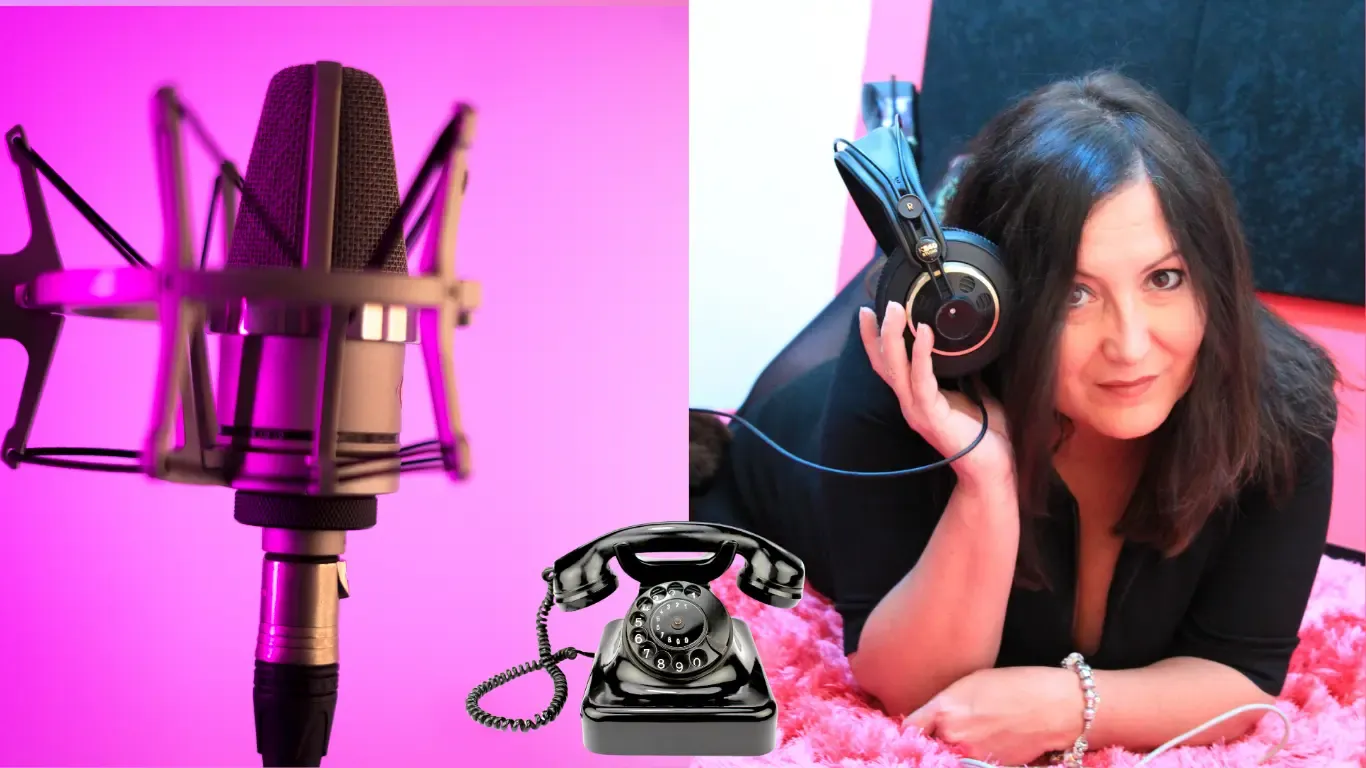
On the phone, the recorded voice welcomes someone before a person picks up. It can give opening hours, direct the call or explain what to have ready. I work on that presence: the smile, rhythm and words that help callers know where they are in the process.
This guide brings together the messages to prepare, scripts to adapt and ideas for keeping them useful throughout the year. To hear different approaches to the delivery, listen to my French voicemail and on-hold demos.
Find out what your callers hear
Before writing the messages, look at what callers actually experience: waiting times, reasons for calling and the points where people hang up. Your own observations help you choose useful information and keep it current.
- Give an accurate indication of what happens next, without promising a response time your switchboard cannot deliver.
- Offer a simple next step: stay on the line, leave a message or use another contact channel.
- Observe what happens after the messages go live, then adjust the wording.
From the first hello to closing time
The initial greeting, main welcome, on-hold message and closed-office announcement each have a role. Add an interactive menu if your organisation needs one. Together, they should feel consistent and show the same care for the caller.
During the wait, a “useful minute” can alternate a short introduction to the company, service information, news and a musical pause. Spoken segments of twelve to twenty seconds and music breaks of ten to fifteen seconds are starting points for composition. Adjust them to the length and purpose of the calls.
Every sentence needs to be accurate when someone hears it. An expired promotion, outdated opening hours or an unrealistic callback promise can undermine the welcome. Before recording, check the names, hours, menu options and commitments in your scripts.
Questions to settle before recording
How can voice over help while callers are on hold?
It gives callers clear information: the service they have reached, a practical detail and the next step available. An attentive voice and a balance of speech and music can make the wait more pleasant. To assess any effect on abandoned calls, compare your observations before and after launch. A message alone cannot guarantee the result.
What should a greeting with opening hours include?
A welcome, the relevant opening hours and directions to the right people. Read the script aloud: callers should be able to understand the department numbers and hours without needing to hear them again.
How should I announce a promotion or event?
Choose one useful fact, keep it short and use a calm delivery. The calendar examples are starting points: replace the bracketed fields with verified information and plan to remove the message when it is no longer current.
How many messages should I prepare?
The initial greeting, the welcome during opening hours, the on-hold message and the closed-office announcement are the four functions described here. Adapt them to your telephone system. A voice menu is useful only if it helps route the calls.
A human voice or an AI voice for telephone greetings?
My work here is a human performance: presence, a smile, breathing and the nuances of your welcome. We choose the direction together. This service does not include voice cloning or a hybrid offer.
How long should each message be?
As working guidelines, allow one sentence, around ten seconds, for the initial greeting; fifteen to twenty-five seconds for a main welcome or closed-office message; and twelve to twenty seconds for an on-hold segment, with musical pauses. The full on-hold sequence may run beyond three minutes. The final length depends on the information callers need and the way your telephone system routes calls.
How long should I allow before the messages go live?
We agree the schedule according to the scripts, approvals and files required. Gather your opening hours, department names, pronunciation guidance and the formats requested by your telephone installer. Delivery of the recordings and installation in your phone system are separate stages.
Twelve ideas for keeping on-hold messages current
Your on-hold messages can follow the key moments of the year. These twelve ideas are useful only when they give callers relevant information. There is no need to replace an accurate message simply to fill a calendar.
SpringMarch · April · May
- MarchEvent
- [Name] will be at [event]. Visit our stand for [verified useful information].
- AprilSomething new
- Our [product or service] is available at [website].
- MayOpening hours and public holidays
- Our opening hours are changing this week. You can find the current hours at [website]. Thank you for your patience.
SummerJune · July · August
- JuneLimited offer
- This week, delivery is free on orders over [confirmed amount].
- JulyService over the summer
- [Explain the summer arrangements]. To help us assist you quickly, please have your order number ready.
- AugustA useful contact
- For [reason], you can email [relevant department's email address].
AutumnSeptember · October · November
- SeptemberBack to business
- Explore our [topic] solutions at [website].
- OctoberCustomer example
- [Company] achieved [verified result] with [solution]. We can tell you more when we return to your call.
- NovemberSeasonal offer
- Explore our seasonal offer on [product or service]. Details are available at [website].
WinterDecember · January · February
- DecemberThank you
- Thank you for your trust this year. [Give the year-end opening hours].
- JanuaryNew Year wishes and contact
- Happy New Year from [Name]. For [reason], email [email address] or visit [website].
- FebruaryAbout the company
- [Name] has been supporting [audience] for [X] years. [Add a useful, verified fact].
A welcome that sounds like your business
The script selects the information; the voice brings presence. A good telephone welcome brings the two together: clear information delivered in a tone that suits your business and the person calling.
We can start with your current messages, clarify the changes, choose a direction and record the agreed versions. My telephone demos will help you prepare for that discussion. Tell me about your project and we can agree the next step.