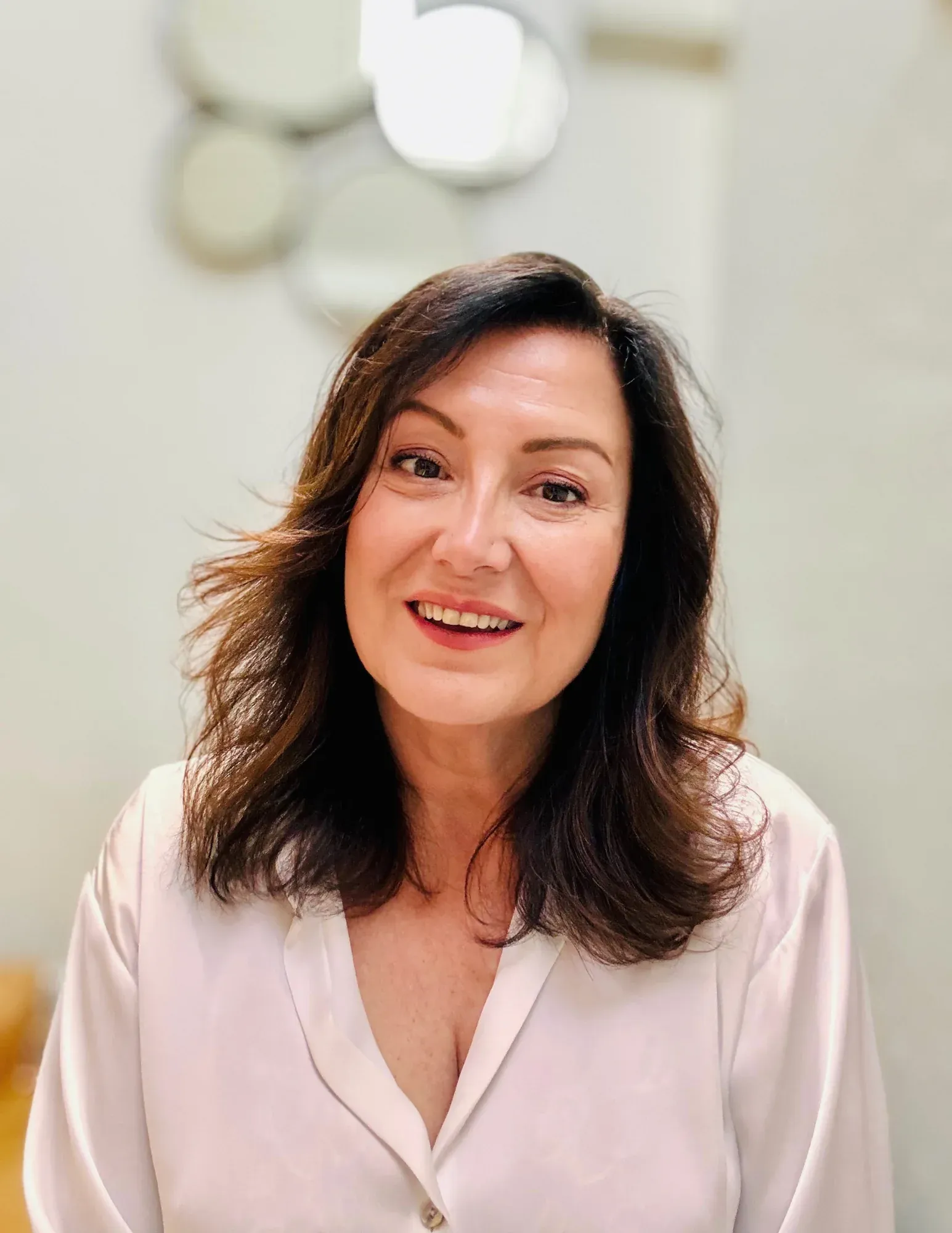
Hearing your own voice come out of a machine you have never authorised is a strange experience. That unsettling feeling of being stripped of your working tool, the one you thought French law protected.
That is what happened to me in May 2026 on Fish Audio, a voice cloning platform, where my voice had been cloned on two different accounts.
Here is the whole story. The exact procedure that got those models removed in less than a day, step by step. Above all, what I discovered afterwards, when the platform assured me in writing that everything had been erased, while my voice was still generating new audio before my eyes.
As a voice over artist, I work with public demos, which probably explains how this clone was made.
Discovering that my voice had been stolen
Emma Harvey, a UK voice over agent, found voices she represents on Fish Audio, cloned without permission. Her LinkedIn post in mid-May alerted me, and I immediately went to check for mine.
It was there, on two different unauthorised accounts. One had even named the clone after me, Estelle Hubert, in full. Sloppy work, and a detail that raises questions: the listing under my name had hardly been used, while the other, anonymous one already showed more than 250 uses. The counter is not the real issue. What is disturbing is seeing your voice available for anyone to use, ready to say anything to anyone, without anybody ever asking you.
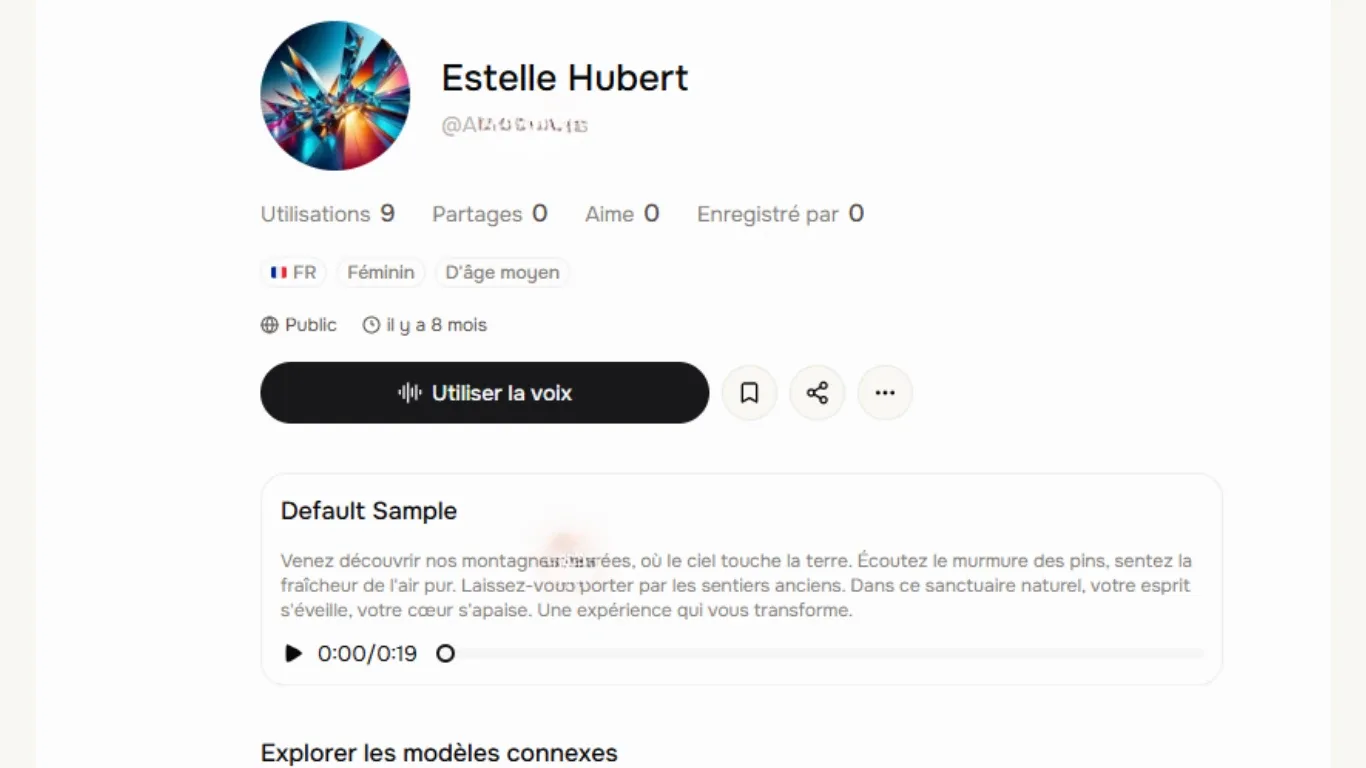
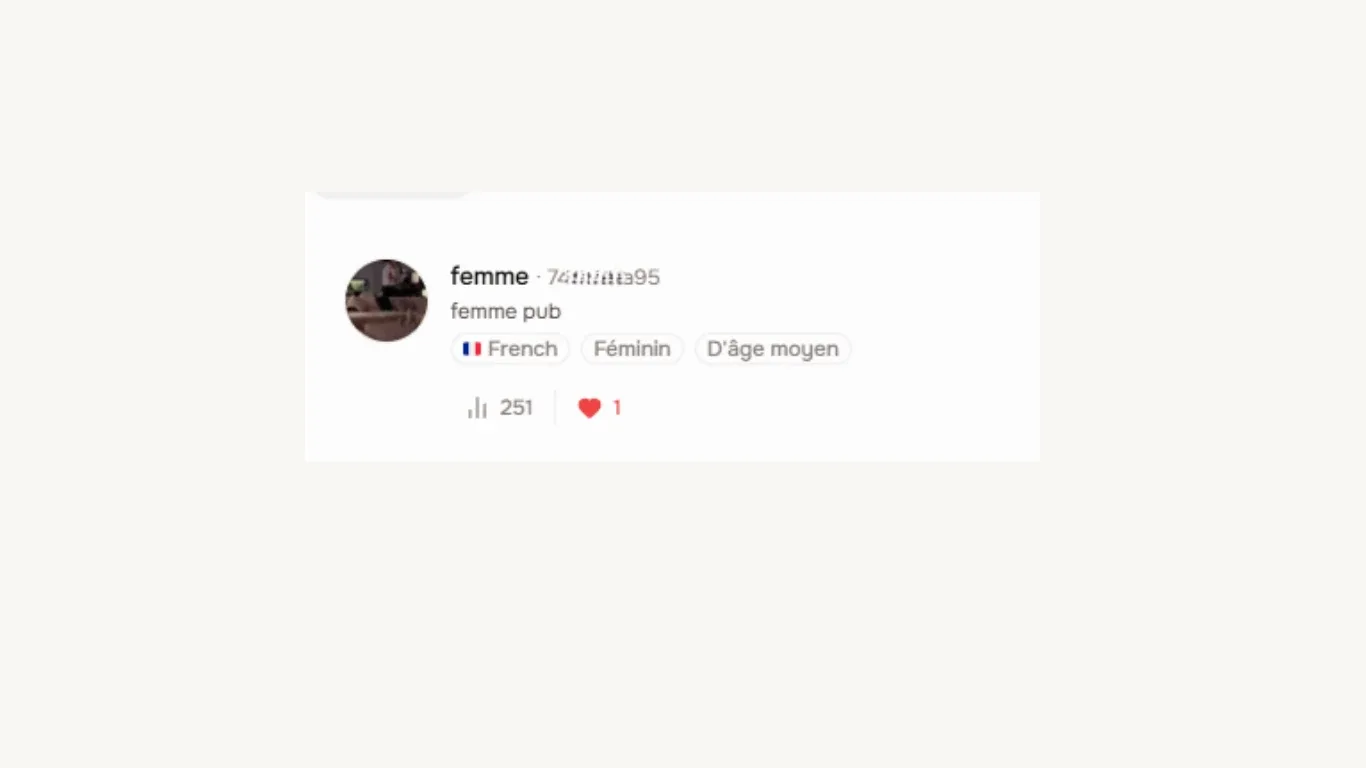
As I worked through the entire catalogue to check whether my voice appeared elsewhere, I recognised a good ten colleagues and alerted them straight away. Then I came across my daughter Florine’s voice, cloned under a pseudonym, with almost 14,000 uses.
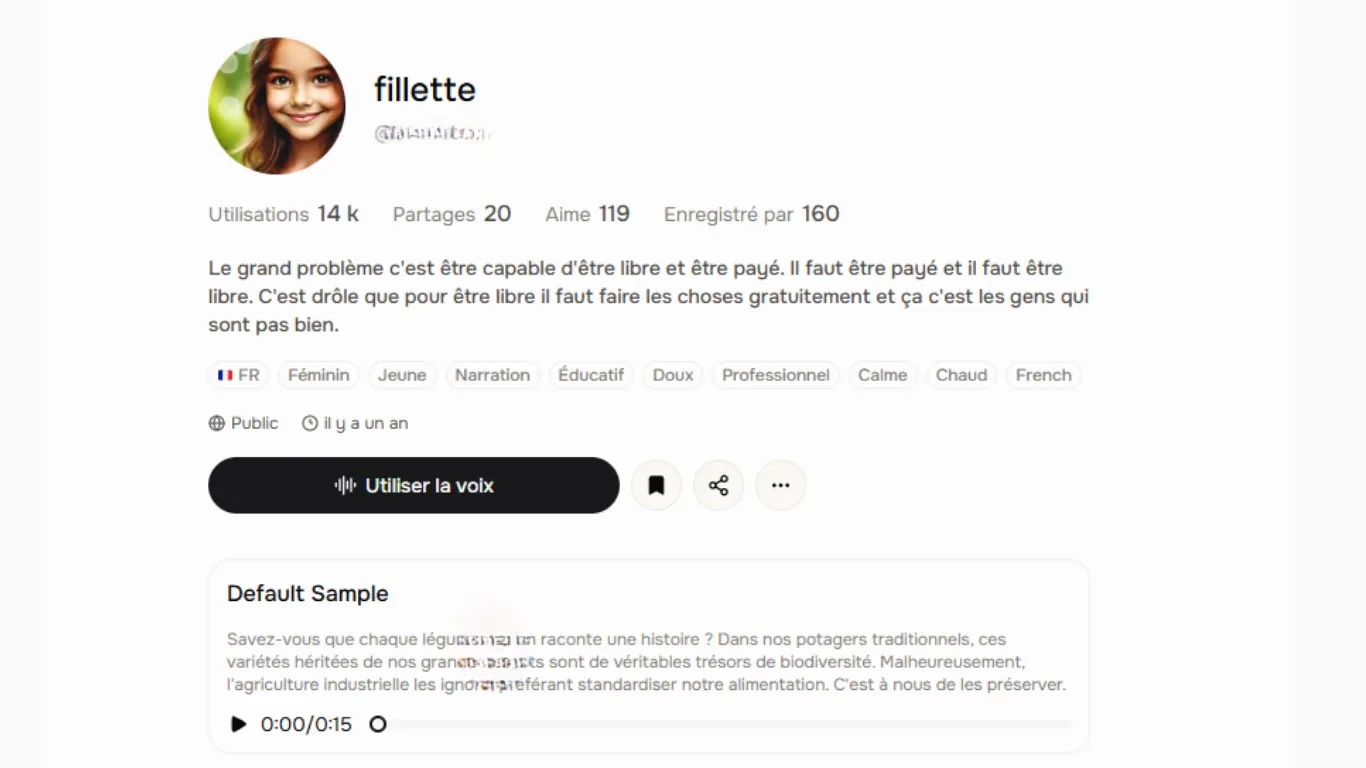
You do not have to be famous for it to happen to you. There are politicians, TF1 news presenters and YouTubers with huge followings, but also much less visible colleagues who earn their living with their voices and their work, stripped of them in exactly the same way. Outright theft, on a massive scale.
How do all these voices get there? Most likely scraped from freely accessible websites and demos. A few months earlier, my website had experienced an abnormal traffic spike: almost 18,000 page loads in a single day, the typical footprint of a bot downloading everything in its path. A single sample is then enough to make a clone.
What French law says: the essentials
Cloning a voice without consent is no grey area. Several legal provisions address it. I am not a lawyer; the precise references are at the bottom of the page.
Under French criminal law, since the SREN Act, distributing AI-generated fake audio that reproduces someone’s voice without their consent is an offence, carrying up to two years in prison and a €45,000 fine when posted online (Article 226-8 of the French Criminal Code). An actor’s voice is also a performance protected by neighbouring rights, and reproducing it without permission may constitute infringement.
Personal data law provides the most useful means of action here. A voice is biometric data under the GDPR and, as such, gives rise to a right to erasure (Article 17). Remember that word, erasure. We will come back to it, because it is the crux of this story.
The underlying problem lies elsewhere. Today, it is up to the victim to prove they never gave consent. The burden of proof is reversed. A bill adopted by the French Senate in April 2026 seeks to reverse that logic and place the burden on AI providers, but it has not yet been passed into law.
In the meantime, what really works is reporting the content. A platform hosting manifestly unlawful content is required to remove it when asked, under the European Digital Services Act (Article 16 of the DSA). That is exactly what got my clones taken down.
Getting a cloned voice removed from Fish Audio: the procedure, step by step
A simple email to Fish Audio support had gone unanswered for a week. What changed everything was their official complaint procedure, the one that actually triggers removal. The reported models were then removed in less than a day.
Here is exactly where to click and what to fill in.
1Open the cloned model’s page
On the model page, find the three-dot menu in the top right corner.
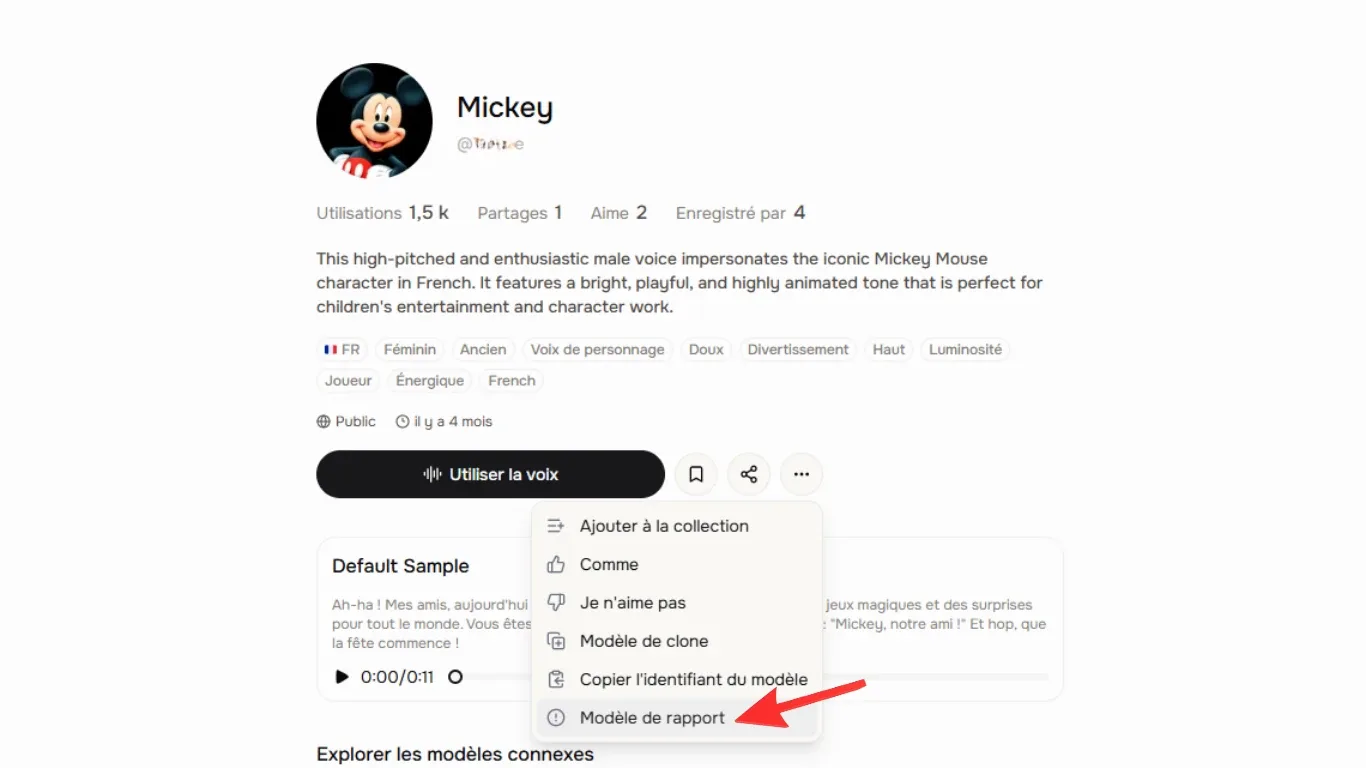
Step 1: the model page and its reporting menu. 2Click “Report Model”
A “Contact Support” window opens.
3Change the request type
This is the trap to avoid. The default type is “Model Report”. Change it to “Copyright Complaint”. Only this option opens the actual rights-infringement removal procedure.
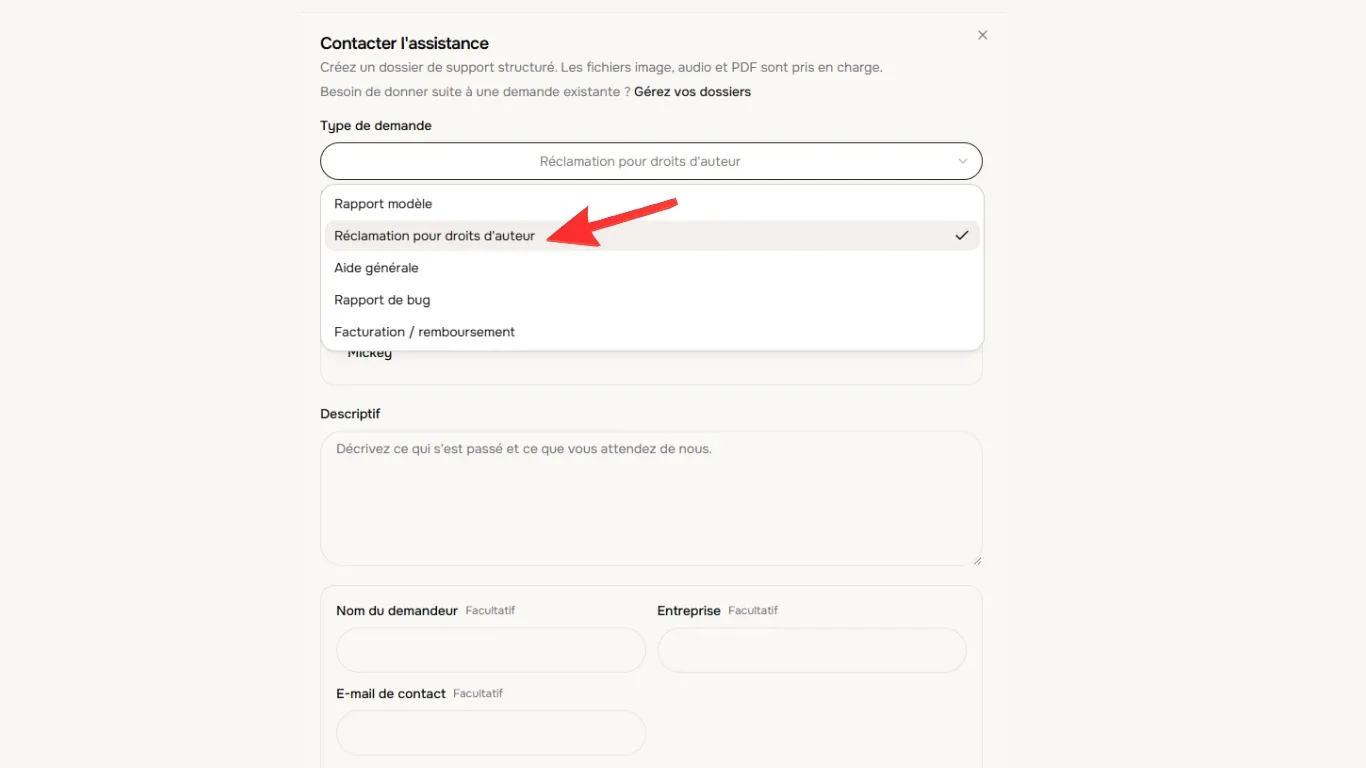
Step 3: change the type to “Copyright Complaint”. 4Write the description in English
This is the language used by their support team. Keep it firm and factual: who you are, the model concerned, the absence of consent, the legal basis and a clear request for permanent removal. Here is the text I used, to adapt to your circumstances and paste into the description field:
Description to paste into the form, in English Hello, I am [your name], a professional voice actor. The model "[model name / ID]" reproduces my voice without my consent. I never authorized the creation, upload or use of any voice model based on my voice. My voice is a protected performance and personal biometric data. This is an unlawful use under EU law (GDPR and the Digital Services Act) and French law. I formally request the immediate and permanent removal of this model. My public demo pages, where my real voice can be verified, are available at: [your website / demo URLs]. Contact: [your email].
5Enter your contact details and references
Provide a contact email address and the URLs of your public demo pages. They help verify that the voice is yours.
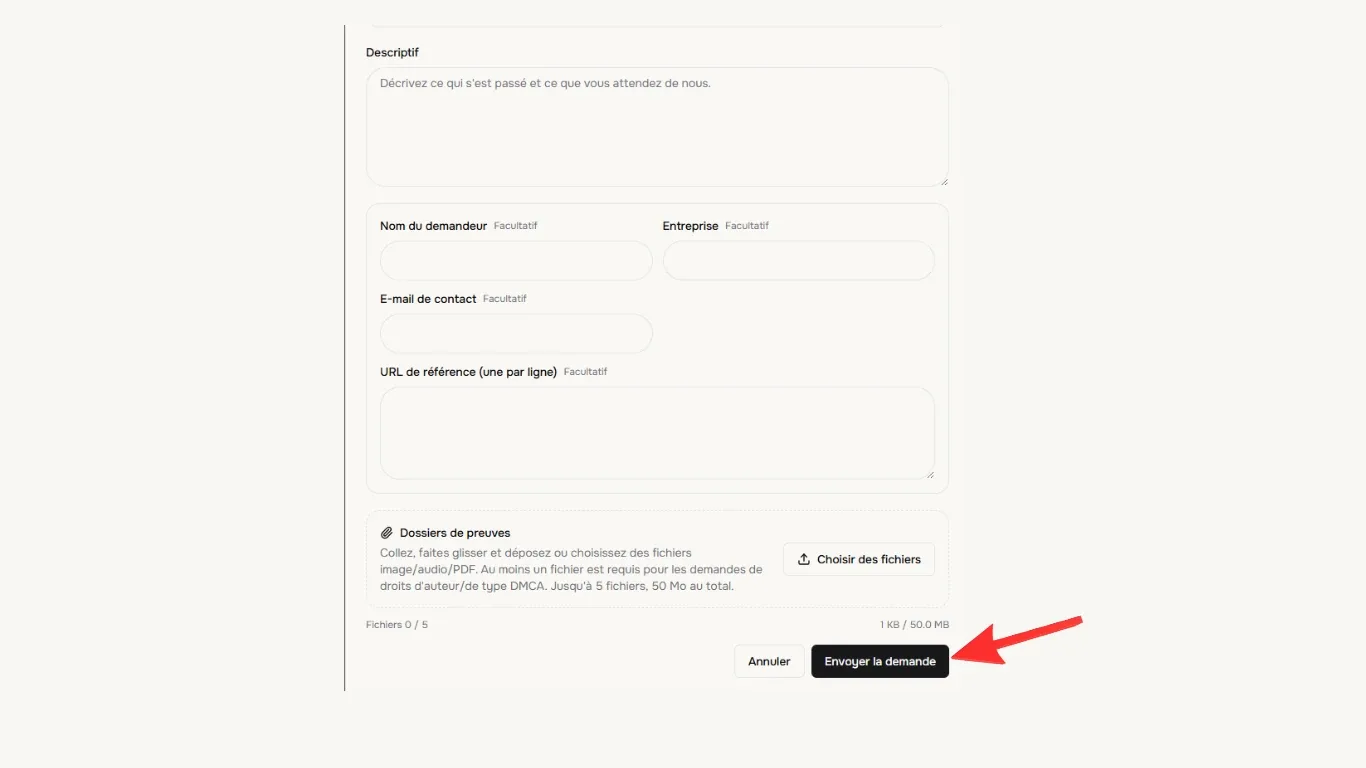
Step 5: the complaint form, including the evidence section. 6Attach audio evidence if you have it
It is not strictly mandatory, but it is the most convincing evidence: an extract from the original production whose voice was used to train the clone. It is often easy to find. The text displayed on the model page, its default sample, draws heavily on a public production: a demo, a commercial or a documentary. In my case, I recognised extracts posted on my own website.
Even without that audio, the platform has everything it needs to decide. Comparing an original voiceprint with a cloned model and checking whether the curves overlap is its core business. A stolen voice leaves a signature, and they know exactly how to read it. That is why they ignore vague requests such as “it sounds like my voice”, but act quickly on a documented case they can verify internally.
7Submit
An acknowledgement arrives straight away, with a case number. In my case, the models were removed that same day.
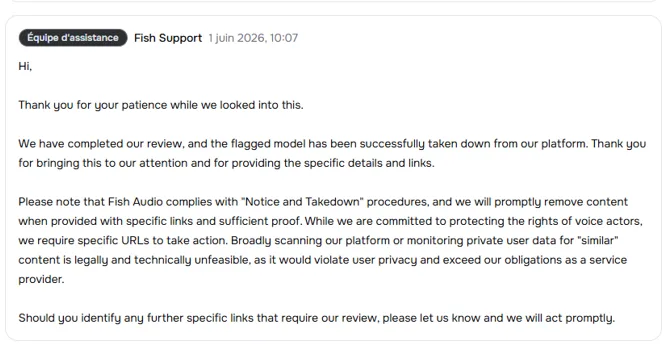
Consider the imbalance. To clone my voice, nobody had to prove anything. To have it removed, I have to provide the exact links and evidence, and comb through the entire catalogue again, clone by clone. They look for nothing: they remove what you point out, and nothing else. The thief gets in without a key; the victim has to show her papers.
At this stage, you think you are in the clear. That is where my story takes a turn.
Removal worked. Everything went wrong afterwards
Here is the part nobody talks about, the part that changes everything.
Once the listings had been removed, I wanted to be sure. Not simply make the models impossible to find, but have them genuinely erased. So I demanded complete deletion.
The reply came in black and white: each model was “completely and permanently deactivated”, access was “revoked for all accounts”, including those that had saved it as a favourite, the system was “entirely non-functional”, and nobody could use it any longer.
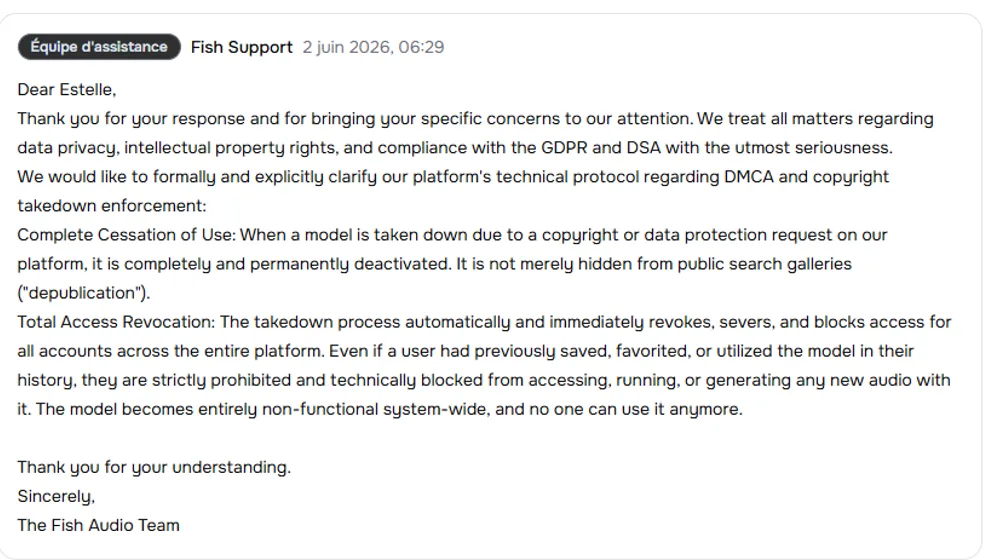
That same day, I tested it from my own account. My voice and my daughter’s were still generating new audio without any difficulty from my favourites. The written statement was false. I documented everything: dated audio files and time-stamped screenshots.
Confronted with the evidence, the platform eventually described a “technical synchronisation bug” that had allowed favourite links to bypass deactivation. They announced a fix, and this time access really was cut off.
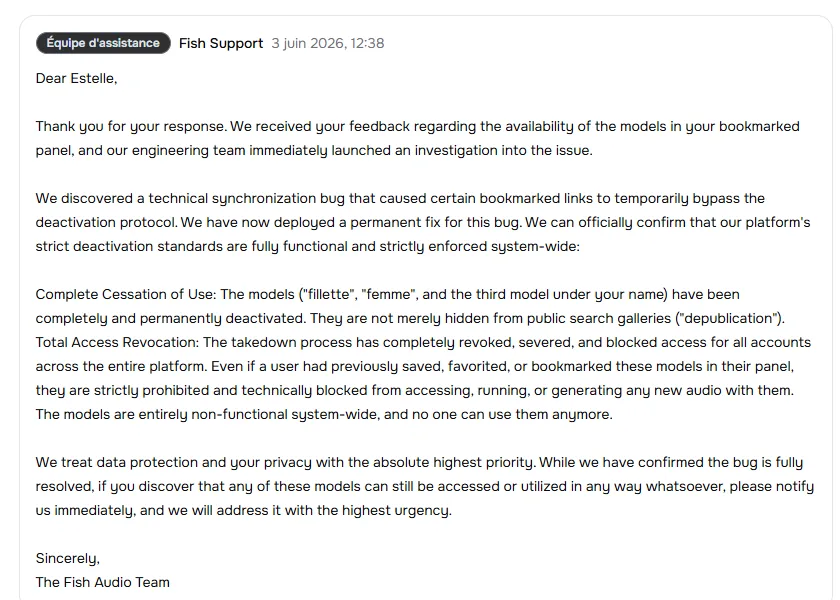
The best part is the end of their message: they thank me. My report helped them discover a bug in their system. So I spent my evenings proving that my voice was still running, only to end up providing unpaid support for the platform hosting it.
Read that sequence carefully. They tell you in writing that everything is dead. Within minutes, you prove otherwise. They reply that it was a bug. The lesson fits in one sentence: their word means nothing until it has been verified, and cutting off access still does not mean erasing the data.
Removal, deactivation and erasure: three different things
This is the most important distinction in the whole article, so let me make it clear.
Removal deletes the public listing. You no longer come across it or retrieve it online. The shopfront is closed.
Deactivation cuts off access to the model. Better, but the model itself is still sitting on their servers. A bug, a restore or a transfer, and it starts working again. That is exactly what happened to me.
Erasure is the only thing that really matters: permanently deleting the model, the source sample, the training data and every backup. That is what the GDPR provides for in black and white, and what you need to demand.
I have since received a partial response. On 26 July, Fish Audio confirmed the operational removal of the three reported models, but not their complete erasure: a separate copy with restricted access is retained for legal reasons. The full timeline is updated below.
How to demand erasure: the email to send
Removal goes through the platform’s form. Erasure goes through its legal team. The address exists; here it is: legal@fish.audio.
This is the email most people forget, and the one that changes everything. Once the listing has been removed, write to them demanding erasure under Article 17 of the GDPR. Here is a template to adapt, in English, the language used by their team:
Dear Fish Audio Legal Team,
I am [your name], a professional voice actor based in the EU. My voice is personal data concerning me, including biometric data under Article 9 of the GDPR.
A voice model reproducing my voice was created on your platform without my consent (case reference: [your case number]). The public page has been removed, but removing or deactivating a model is not erasing it. As long as the model and its associated data remain stored on your systems, a bug, a restore or a transfer can make it operational again.
Under Article 17 of the GDPR, I formally require:
1. The actual, complete and irreversible erasure of the voice model and of all associated data, including vector embeddings, training data, derived files and all backups.
2. The revocation of any remaining access for every account that had saved, favorited or used this model.
3. Written confirmation of the effective erasure, distinct from a statement of deactivation, specifying the method, the date, and the systems and backups covered, attesting that no copy or backup remains and that the model cannot be restored, signed by a named person.
Please also provide the contact details of your EU representative under Article 27 of the GDPR.
Failing written confirmation within a reasonable deadline, I reserve the right to lodge a complaint with the relevant data protection authority.
Sincerely,
[your name]
Three demands to hold on to: actual, irreversible erasure; revocation of any remaining access; and dated, signed written confirmation, distinct from a simple “deactivation”. Without that confirmation, nothing definitive has been obtained.
Why I did not take legal action
It is not resignation. I sought advice, and the lawyer handling the French dubbing actors’ collective action against these platforms was willing to represent me. I made an informed decision not to proceed.
My direct loss amounts to a few dozen uses, whereas intellectual property litigation against an international company costs thousands of euros and takes years. As I have always worked independently, outside the French system of salaried performer engagements, I do not have access to collective funding that could offset those costs. For one individual, the figures do not add up.
Above all, and this is the real issue, a lawsuit would not resolve what matters most: erasure. I want my data to disappear for good. The quickest means of achieving that is the right to erasure and collective pressure, rather than endless individual proceedings.
Legal action still makes sense in two situations: substantial, demonstrable harm, or a well-organised collective action that shares the costs. That is precisely what Jonathan Elkaim’s team and professional organisations are pursuing, and their fight is only beginning. If you are affected and the harm is serious, that is the route to consider.
Cloned voice: what you can do now
If you earn your living with your voice, go and check, and do more than type in your name. Many clones carry no name or hide behind a pseudonym. I found colleagues whose voices were being used without any mention of their identity, and the most-used clone of my own voice did not carry my name either. Search, listen to French voices in your range and look for your intonation.
Do not judge by quality alone. These clones are often crude, and you may barely recognise yourself, but they sound similar enough to fool someone listening quickly and cause harm. If you find yours, you now know how to respond: the procedure in this article gets a listing removed in less than a day, and the email to legal@fish.audio starts the next stage.
Document everything, even if you do not take legal action: screenshots, dates and audio. Test it yourself after every reply from the platform, rather than taking its word for it. The strongest part of my case is proof that its statement about erasure was false. A prepared file gives you strength if you need it. And if you recognise a colleague’s voice, tell them. Word of mouth between us remains our best alarm.
But the real issue is broader, and it makes me furious. Today, without laws being properly enforced, we are our own only alarm: we have to search catalogues, recognise one another’s voices and warn our colleagues. We are left to defend stolen work on our own while the law lags behind. In France, dubbing actors have their unions, collective action and lawyers. We independent voice over artists have nobody representing us. As long as we remain isolated, we will report our clones one by one while platforms create a thousand more.
Come together in a voice over association? That is a full-time job. And I am a voice over artist.
Update, 19 June 2026
As of 19 June, my fight continued. On 7 June, I had formally demanded that Fish Audio’s legal team confirm in writing that my voice had actually been erased, within a deadline that had already passed. I had still received nothing: no confirmation, no letter. Until I had it, I considered my voice to be still sitting on their servers.
Beyond my case, things are moving on both sides of the Atlantic. On 18 June, the US Senate Judiciary Committee voted unanimously to advance the NO FAKES Act, a bipartisan bill that would create a substantive right over one’s voice and likeness, including removal of AI content made without consent. NAVA and a broad coalition of actors, creators and businesses support it, following more than a hundred meetings in Congress. In France, the bill I mention above is pushing in the same direction.
Nothing has yet been passed into law or implemented. But these steps forward say something simple: the fight pays off when many of us take part. All the more reason to keep searching, reporting and warning our colleagues. And all the more reason for us French voices to stop standing alone.
Update, 4 August 2026: three models removed, two more discovered
On 26 July, Fish Audio finally replied to me in writing. The platform confirmed that it had removed the three models I reported from its production systems (two reproducing my voice and one my daughter Florine’s), along with their audio training files. According to Fish Audio, they can no longer be used to generate new audio.
This is not complete erasure. Fish Audio says it retains a separate copy with restricted access for legal reasons. The platform also refuses to disclose the identities of the users who created the models. It says it has added them to a voiceprint blocking system, without providing evidence of its scope or effectiveness.
Today, 4 August, I discovered two more models using my voice on Fish Audio. I do not yet know when they were created or whether they were already there before the blocking system was announced. But the situation remains the same: I still have to search the platform to find my own voice, model after model.
Update, 9 October 2026: what has changed since the summer
This section brings together what was public and verifiable as of 9 October 2026, with sources. In my own case, the last development published here remains the update of 4 August.
At Fish Audio
Its removal guide, updated on 12 July 2026, describes the same starting point as my step 1: the three-dot menu, “Report Model”, then the “Copyright Complaint” type, labelled “Réclamation pour droits d’auteur” in the French interface. It now requires a government-issued photo ID and explains that a link accompanied only by “it sounds like my voice” is not enough.
Its cloning page says that “just ten seconds” of clean voice audio are enough for an instant clone, leaving users responsible for checking that they have the rights. Only professional voice cloning, launched on 15 June 2026, requires the person whose voice is being cloned to read a text live as verification. As of 9 October, no public page describes the voiceprint blocking system announced in the reply of 26 July.
In France
The bill reversing the burden of proof, adopted unanimously by the Senate on 8 April 2026, was adopted without amendment by the National Assembly’s Cultural Affairs Committee on 2 June. Scheduled for the GDR group’s allotted parliamentary day on 11 June, it was not put to a vote that day (AFP, 3 July 2026). As of 9 October, the Senate’s legislative dossier still showed it as pending in the National Assembly.
In Europe
Since 2 August 2026, the European AI Act (Article 50) has required professional users who distribute an audio deepfake, a voice generated or altered by AI that resembles a real person and could appear authentic, to disclose that it was AI-generated. Providers have until 2 December 2026 to implement technical marking of generated content for systems already on the market (Regulation 2026/1744 of 8 July 2026).
In the United States
Following the Senate Judiciary Committee’s unanimous vote on 18 June, supported in particular by NAVA, the NO FAKES Act has still not been enacted: on 30 September 2026, Senator Marsha Blackburn requested its passage by unanimous consent, and Senator Ted Cruz objected.
None of these texts changes the procedure described above: report the listing, then demand erasure in writing.
Frequently asked questions
How can I tell whether AI has cloned my voice?
Listen on public voice cloning platforms such as Fish Audio, ElevenLabs, PlayHT and others. Search for your name, but above all explore and listen, because many clones are anonymous or use pseudonyms. A French voice reproducing your intonation is already a warning sign.
How do I get a cloned voice removed from Fish Audio?
On the model page, open the three-dot menu, choose “Report Model”, then select “Copyright Complaint”. Write a firm description in English and attach an extract from your original production. Removal generally takes 24 to 48 hours. As of 9 October 2026, the official guide also requires photo ID.
Does removing the listing really erase my voice?
No. Removal deletes the listing, and even an announced “deactivation” guarantees nothing: in my case, the platform stated in writing that everything was deactivated while I was still generating new audio that same day. For actual deletion, you need to demand erasure under Article 17 of the GDPR in writing from its legal team (legal@fish.audio).
What is the difference between deactivation and erasure?
Deactivation cuts off access, but the model remains stored on the servers and may become active again after a bug or a restore. Erasure permanently deletes the model, source sample, training data and backups. Only erasure ends the risk.
Is cloning my voice without my consent illegal in France?
Yes. Distributing AI-generated fake audio that reproduces your voice without consent is an offence, carrying up to two years in prison and a €45,000 fine when posted online (Article 226-8 of the French Criminal Code). Your voice is also protected by neighbouring rights and the GDPR.
Do I need a lawyer to get my voice removed?
No. The reporting procedure and GDPR erasure request are free and do not require a lawyer. Legal proceedings become relevant only where the harm is serious, preferably through a collective action that shares the costs.
How long does removal take?
Once a properly prepared case has been submitted, using the right request type and audio evidence, allow anything from a few hours to 48 hours. A simple email to support may go unanswered. Complete erasure, however, may take several follow-ups.
How does a voice over artist’s voice get cloned without permission?
Clones are made by scraping freely available voices from websites and public demos. One clean sample is enough to train a model. A few months before discovering mine, my website had received almost 18,000 page loads in one day, the footprint of a bot downloading everything in its path. Fish Audio advertises ten seconds of voice audio for an instant clone.
How can I protect my voice against AI cloning?
No method blocks scraping 100%, but the risk can be reduced: audio watermarks on files, fingerprints of the originals and metadata recording authorship. The approach is described in my article on audio file integrity and traceability. Regularly checking cloning platforms remains the most effective habit.
Is an AI voice clone faithful to the original?
Not always, and that is the trap. Many clones are crude, and you may not really recognise yourself. Yet they sound similar enough to fool someone listening quickly. Poor quality is never a reason to leave a clone online.
Can I safely use an AI or cloned voice over in an advertisement?
Using a voice generated from a real person without their consent carries real risks. An actor’s voice is a protected performance, and distributing AI-generated fake audio reproducing a voice without consent is an offence (Article 226-8 of the French Criminal Code). Commissioning a human voice with written usage rights protects the brand as well as the performer. In the European Union, since 2 August 2026, an audio deepfake distributed by a professional must be disclosed as AI-generated (AI Act, Article 50).
Sources and useful links
Legal framework
- Article 226-8 of the French Criminal Code (SREN Act of 21 May 2024): Légifrance
- Performers’ neighbouring rights, Article L.335-4 of the French Intellectual Property Code: Légifrance
- Right to erasure (GDPR, Article 17), CNIL: CNIL
- Digital Services Act, Article 16 (notification and removal by the hosting provider): EUR-Lex
- Bill reversing the burden of proof, adopted by the French Senate on 8 April 2026: franceinfo
Taking action
- Fish Audio’s terms and DMCA policy: fish.audio
- Fish Audio legal team for GDPR erasure: legal@fish.audio
- Lodge a complaint with the CNIL: cnil.fr/plaintes
- Report a cloned voice to NAVA (the US National Association of Voice Actors): navavoices.org
- Law firm handling the dubbing actors’ collective action (Jonathan Elkaim, Hiro Avocats): hiro-avocats.com
Collective action
- LesVoix.fr on AI voice cloning: lesvoix.fr
- United Voice Artists: unitedvoiceartists.com
Understanding the dubbing actors’ case
- franceinfo: franceinfo
Update of 9 October 2026
- Fish Audio’s removal guide (DMCA), updated on 12 July 2026: fish.audio
- Instant cloning, conditions stated by Fish Audio: fish.audio
- Professional cloning verified by the person concerned, 15 June 2026: fish.audio
- Bill on the presumption of use of cultural content, legislative dossier: French Senate
- GDR group’s allotted parliamentary day, 11 June 2026: French National Assembly; subsequent proceedings: Livres Hebdo, AFP, 3 July 2026
- European AI Act, Article 50: EUR-Lex; Regulation 2026/1744 (Digital Omnibus on AI): EUR-Lex
- NO FAKES Act, Senate Judiciary Committee vote, 18 June 2026: Senator Blackburn’s statement; request for passage on 30 September 2026: Senate record